
The First Hard Rain Shouldn’t Be Your Gutter Inspection
An owner emails photos of water sheeting down the stucco outside their unit. A downspout has been quietly dumping against the foundation since spring, and nobody noticed until the ground around it turned to mud. By the time someone connects the dots, there’s a slick patch of ice forming near the entrance, and a council member is asking why this wasn’t caught sooner.
None of that is unusual. It’s just seasonal. Every fall, gutters that worked fine all summer suddenly don’t, and the property manager finds out about it from a resident instead of a maintenance report.
The frustrating part is how avoidable most of it is. A clogged gutter or a misaligned downspout doesn’t fail quietly. It gives off signs for weeks before anyone notices, if someone happens to be looking in the right place at the right height.
Why This Sneaks Up on Fall Properties Specifically
Gutters sit above eye level, which is exactly why they get missed. Nobody walks a property looking up unless they have a reason to.
Water that isn’t draining the way it’s supposed to doesn’t just disappear. It tracks down siding, pools against foundations, and works its way behind cladding and trim. In the Okanagan, that risk compounds once temperatures drop: standing water in a blocked gutter can freeze, expand, and push ice back under roofing material. That’s ice damming, and it’s a much bigger job than a fall cleaning ever would have been.
For strata properties, there’s a second layer to this. Drainage systems are part of what gets evaluated in a depreciation report when forecasting a strata corporation’s 30-year repair and renewal costs. Under BC’s current requirements, strata corporations with five or more lots must renew their depreciation report at least every five years, and can no longer defer it indefinitely with an annual 3/4 vote. Accurate, current information about component condition carries more weight than it used to.
And fall is exactly when most councils and commercial property managers are locking in next year’s maintenance budget. Knowing what actually needs attention, versus what can reasonably wait, belongs in that conversation now.
What We Actually Look At While We’re Up There
We’re not building envelope engineers, roofers, or inspectors, and we won’t pretend otherwise. What we are is up at gutter level, regularly, on strata and commercial properties across Kelowna, West Kelowna, and Lake Country, which puts us in a decent position to notice things a ground-level walk-through misses.
That includes sections pulling away from the fascia, downspouts disconnected or draining too close to a foundation, granule buildup from an aging roof, and staining that suggests overflow has been happening for a while, not just during the last storm.
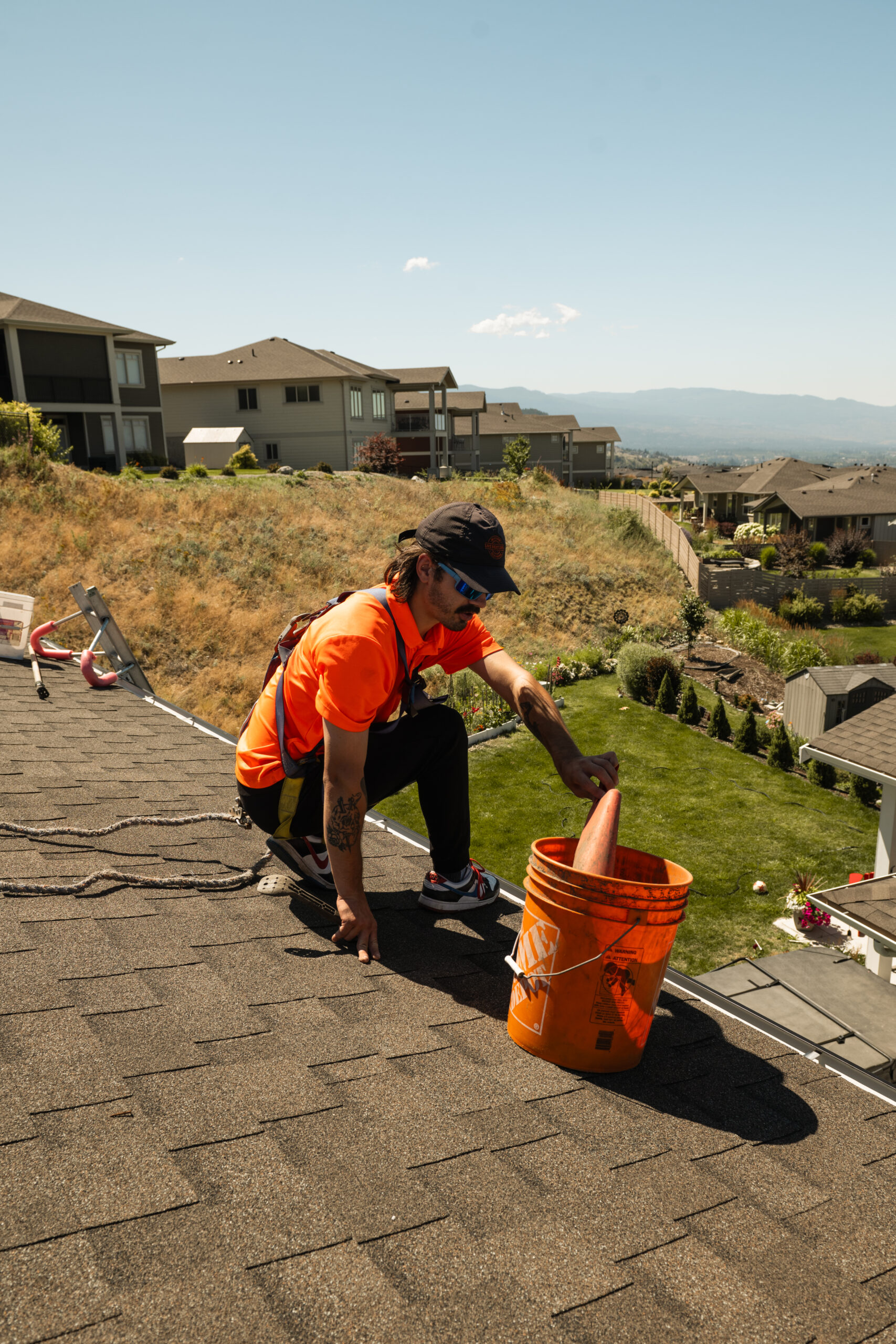
Clearing debris before it freezes in place.
We also flag moss on shaded or north-facing slopes when we see it. It’s a separate issue from drainage, but a related one, since moss holds moisture against roofing material and can affect how well water sheds into the gutters below it. Worth its own conversation, not squeezed into this one.
When something looks like it deserves a closer look from an engineer, roofer, or building envelope specialist, that’s exactly what we tell you, with photos, so you’re not guessing what we mean.

Fall protection in place on steeper rooflines.
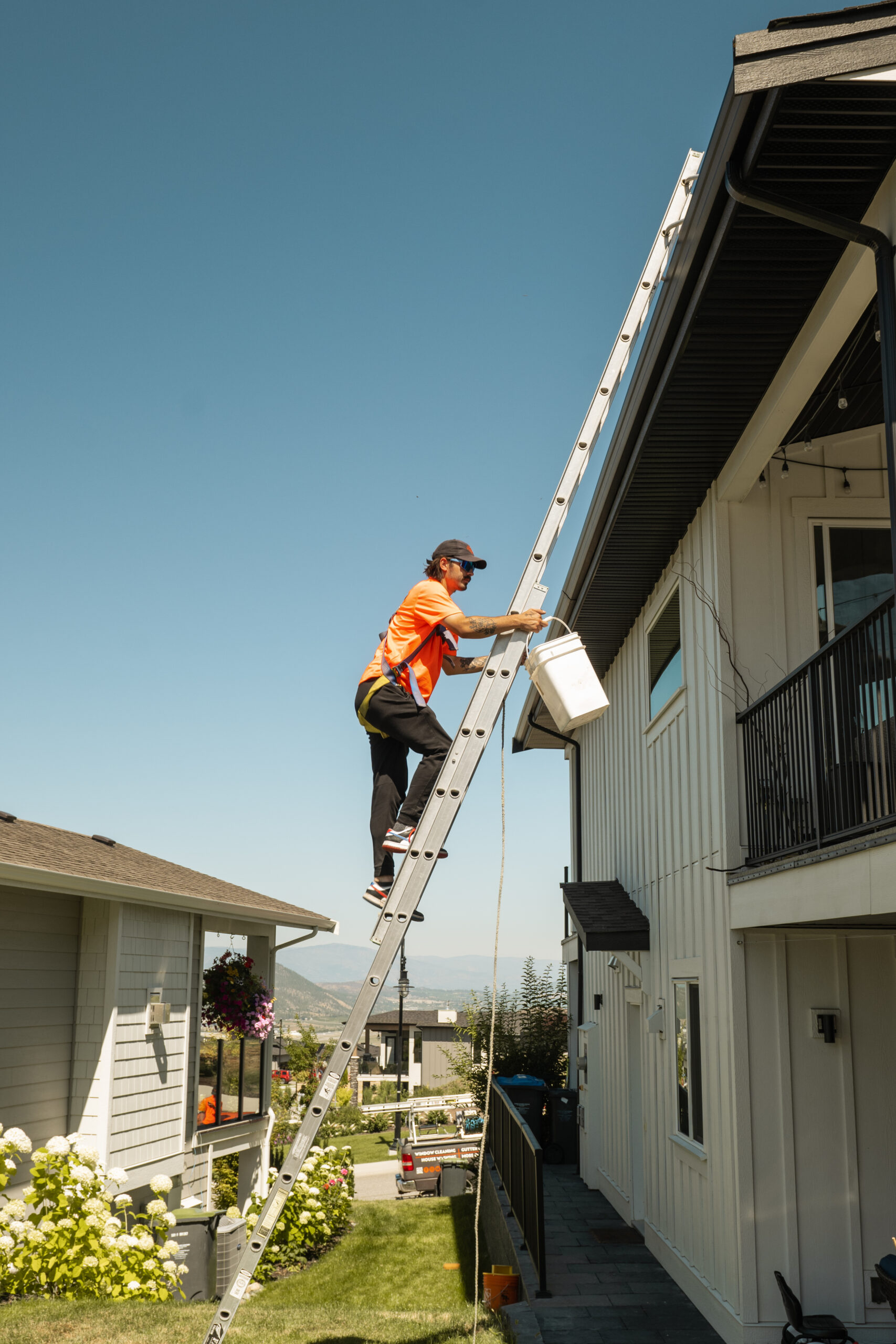
Ladder access on multi-unit buildings.
What We Document
- Overflow or staining
- Sagging or separated gutter sections
- Downspout discharge concerns
- Moss or visible roof debris
- Photos of anything worth following up on
Property Manager’s Fall Checklist
Something you can pull up on your phone while walking the property.
Walk the property after the next significant rainfall
Water overshooting a gutter, sheeting down a wall, or pooling near a foundation tells you more in ten minutes than a dry-weather glance ever will.
Confirm downspouts discharge away from the building
Not against a foundation wall, and not onto a walkway that will ice over the moment it freezes.
Look for sagging, separation, or pulling at seams and corners
Usually means fasteners or brackets need attention before the section fails outright.
Check fascia, siding, and stucco below the roofline for staining
Streaking below the roofline almost always means overflow has been happening longer than one storm.
Note any moss or algae on shaded roof slopes
Not urgent on its own, but worth its own line item rather than letting it sit indefinitely.
Book cleaning before the first hard frost, not after
Frozen debris turns a routine job into a much slower, more expensive one.
Ask your contractor to document conditions, not just clean and leave
Photos from the cleaning give you something concrete for council meetings and depreciation report updates.
What to Document
Dated photos of any staining, sagging, or standing water, plus notes on which downspouts drain where. This is the record that makes a maintenance decision easy to explain at a council meeting later, and it’s the same record a depreciation report provider will want to see.
Red Flags Worth Escalating
Water actively entering the building envelope, staining that’s spreading rather than static, or a downspout draining directly against a foundation wall. None of these are things we’d diagnose ourselves, but they’re exactly the kind of finding that should go to a qualified professional before winter, not after.
The Takeaway
A fall gutter and drainage check is inexpensive, fast, and gives you documentation you can actually use. Tracing a leak back to its source in January is none of those things.
When you’re comparing contractors for this kind of work, three questions separate the reliable ones from the rest: Are they insured for work at height, and can they prove it? Do they follow WorkSafeBC’s fall protection requirements for the access your property needs? And will they document what they find, not just what they cleaned?
If you manage several properties and aren’t sure what condition the gutters are actually in before freeze-up, that’s a fast thing for us to help you get clarity on. Reach out here and we’ll walk you through what that would look like for your portfolio.
Sources: WorkSafeBC: Fall Protection; Government of British Columbia: Strata Depreciation Reports; CHOA: What You Need to Know: Depreciation Reports. This article is general information only, not legal, engineering, insurance, or financial advice.